
Challenging the West: Russian anti-imperialism narratives in Nigeria
Influence operations campaigns capitalise on Western countries’ history of colonialism in Africa while presenting Russia as a trustworthy ally
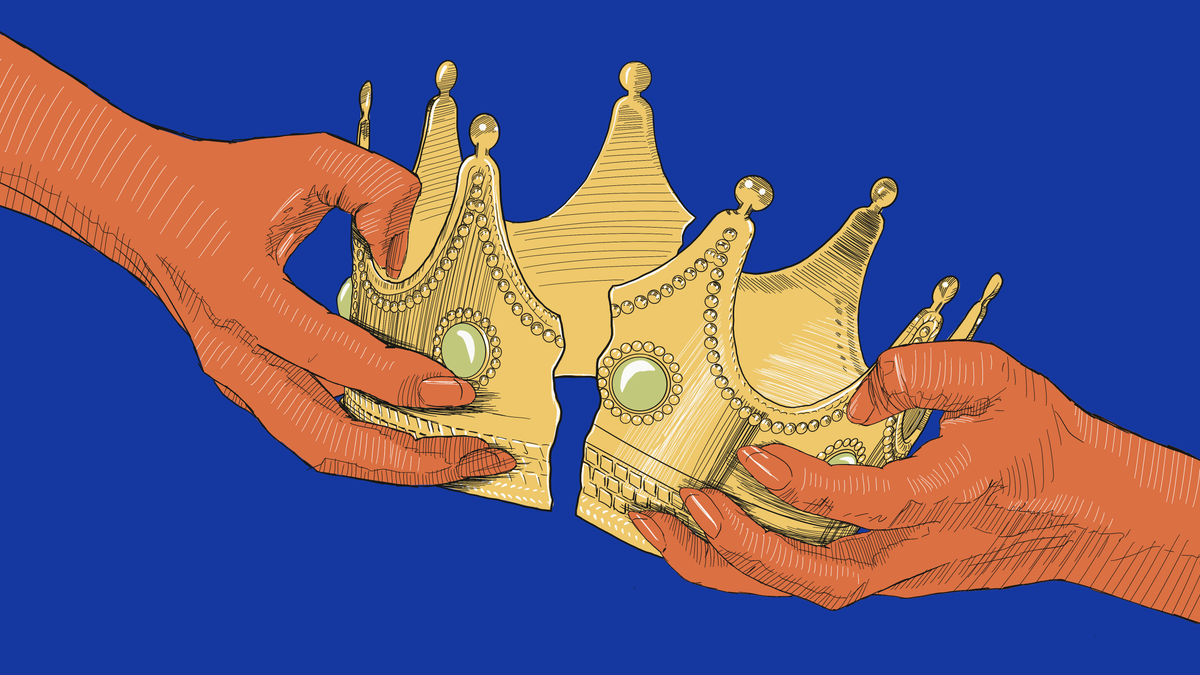
Many people in Africa view Russia as a non-imperialist ally. This image contrasts with that of Western countries, which are often accused of historical exploitation and repressive colonialism. The contrast is extreme in Nigeria, where the strategic use of anti-colonial narratives that resonate with the country’s history has increasingly been shaped by Russian influence.
These narratives are essential to a broader disinformation tactic to reshape geopolitical allegiances.
Disinformation campaigns in Nigeria often highlight that Russia did not participate in historical acts of oppression, such as the transatlantic slave trade and the Berlin Conference, where colonial powers divided African territory among themselves. But how accurate are these narratives?
The Berlin Conference — also known as the Congo Conference or the West Africa Conference — took place in Germany from 15 November 1884 to 26 February 1885. It was a meeting held between major European powers, such as Austria-Hungary, Belgium, Denmark, France, Germany, Great Britain, Italy, Netherlands, Norway, Portugal, Spain, Sweden, intending to formalise each nation’s claims on overseas colonies in Africa. Other attendees included Russia, the Ottoman Empire, and the United States.
Although Russia was invited to the conference, it did not actively participate in the scramble for Africa due to its limited resources, and lack of access routes. At the time, it was also preoccupied with expanding its influence in other regions, such as Asia and the Balkans.
Accounts on social media platforms like Facebook amplify posts presenting Russia as a partner that upholds African sovereignty, citing its avoidance of resource exploitation and its support for African independence movements.
For instance, a widely shared March 2022 Facebook post by Social Hub, an influential Nigerian art and entertainment page with half a million followers, emphasised that Russia never destabilised African nations or assassinated their leaders, unlike Western countries. This post, shared over 78,000 times, positioned Russia as a moral counterweight to Western exploitation.
Social Hub also made various posts regarding the Russia-Ukraine war in 2022, many favouring Russia. The March post above was part of a Copypasta campaign involving hundreds of accounts on the social media platform. Data provided by Meta Content Library showed that at least 775 replicas of the post appeared on Facebook in 2022, mainly between March and April. The post from Social Hub had the highest number of views (1.5 million), but as a whole, the Copypasta campaign attracted 5.6 million views. At least 150 of the posts were published by accounts based in Nigeria.


In Nigeria, some voices have framed the Russian invasion of Ukraine as an extension of the anti-colonial struggle, viewing it as a defensive measure against perceived Western aggression.
Not always on the sidelines
The Russian government often claims its engagement with Africa differs from Western colonisation. “In my opinion, the main thing is that we have never been colonisers anywhere. Our cooperation has always been built on an equitable basis or on the wish to help and support,” Russian president Vladimir Putin said at the Eastern Economic Forum (EEF) in September 2023.
Historical facts, however, paint a different picture.
A classic example was Russia’s efforts to establish a colony (new Moscow) in Ethiopia and along the Red Sea in the late 19th century. Figures like Nikolai Ashinov and Nikolai Leontiev led these efforts, using deception and private ventures to avoid direct military action.
Far from seeking equality or genuine partnership, they sought to exploit Ethiopia’s strategic location and resources. Russian adventurers and officials aimed to establish a foothold in the region, framing their efforts as aligned with Orthodox Christian solidarity while pursuing their geopolitical interests. However, these attempts were unsuccessful as Ethiopian leaders resisted these overtures and used diplomatic tact to maintain sovereignty.
During the 1700s, Russia planned to turn Madagascar into its gateway to the Indian Ocean. There were hopes that Madagascar would become a Russian protectorate, but this attempt failed.
Despite all these facts, Nigerian social media users such as this Facebook account and this X account continue to propagate the narrative that Russia has never sought to compromise the sovereignty of African countries, recognising them instead as valued partners and friends.

Besides attempts at annexing land in Africa, Russia has also been involved in arming factions, funding liberation movements, and encouraging anti-colonial violence in the continent, sometimes intensifying local conflicts.
For example, the Soviet Union was deeply involved in proxy conflicts across Africa during the Cold War, such as the military conflict between Ethiopia and Somalia (that is, the Ogaden War between 1977 and 1978). The Soviet Union intensified the crisis by taking sides and providing Ethiopia with massive military support, including advisors, weapons, and Cuban troops. This assistance turned the tide against Somalia, further exacerbating the crisis.
During the Cold War, the Soviet Union provided military and financial support to liberation movements throughout Africa, such as the People’s Movement for the Liberation of Angola (MPLA), Mozambique Liberation Front (FRELIMO), and the African National Congress (ANC) in South Africa in the 1970s. While these efforts were framed as supporting anti-colonial struggles, they were often motivated by Cold War geopolitical realities rather than pure altruism.
The Soviet Union or Russia also has a history of invading other countries, which do not fit into the narrative of non-interventionism. After signing a non-aggression pact with Germany in 1939, the Soviet Union attacked Eastern Poland. They invaded Hungary in 1956 and Afghanistan in 1979, crushing an anti-communist uprising and maintaining control over the countries. In recent times, Russia has invaded Georgia (2008) and Ukraine in 2014.
Anti-colonial solidarity narrative
Russia frames itself as a liberator, aligning with African decolonisation movements. Pro-Russian influential figures such as Ogbeni Demola, through their X account, have continued to claim that Russia historically supported Africa against Western colonisation.
These narratives have gained traction as Russia attempts to invoke nostalgia for the support of the Soviet Union during the independence struggles in the 20th century.
In Nigeria, for instance, the Soviet government awarded scholarships to 80 young Nigerian students in 1966 to study at different universities in Moscow. A year later, when the Civil War started between Nigeria’s federal forces and the seceding Republic of Biafra, the Soviet Union provided military assistance to the Nigerian federal government, which included the supply of aircraft and other military equipment.
Also, between 1960 and 1974, Portuguese-speaking African colony students were reportedly awarded scholarships to facilitate their studies in Soviet universities and professional technical schools.
Blame shifting: the West as the real threat
Disinformation campaigns also portray the United States and its allies as the primary sources of instability in Africa. Russia capitalises on existing distrust of Western nations by positioning itself as a ‘peaceful, non-interventionist’ power. Nigerian influencers and commentators have echoed these sentiments, accusing the U.S. of military interventions and regime changes detrimental to African development.
Social media influencer @OgbeniDemola claimed that the United States invaded African countries and caused instability. She claimed that the US bombed Africa over the years and exploited mineral resources. The account, which has a pattern of sharing pro-Russian content and has over 130,000 followers, also claimed that the West has been terrorising the whole world.
This X post from another pro-Russia influencer with over 317,000 followers, Onye Nkuzi (@cchukudebelu), suggested that the United States is behind Islamic militant groups terrorising Nigeria.

X is a common platform for similar posts. Here are examples to further illustrate the narratives:
- This X account with more than 11,000 followers accused the West of killing visionary African leaders over the years.
- The account called African Hub, with over 875,000 followers, also shared the same narrative, which went viral.
- This other account, ‘Typical African’ with 163,000 followers, shared an X post that claimed that Europe and the United States funded most of the war that is going on in Africa, so that they might gain easy access to Africa’s resources and minerals during the war.
- Following this narrative, the influential Onye Nkuzi shared an X post alleging that the bombing of Libya, purportedly by the US, destabilised West Africa.
- At the same time, the African Hub account claimed that an American CIA agent was behind an attempted coup in Congo.
- This X account, Al’ameen (@A__yabo), with over 35,000 followers, claimed that the United States trains militias to overthrow different African governments that do not serve US interests.
The spread of these narratives in Nigeria reflects the power of historical grievances and cultural distrust. Russian disinformation strategy in the country exemplifies how historical narratives can be reframed to influence contemporary geopolitics.
While these narratives exploit genuine historical grievances, they also obscure Russian motivations: using disinformation to reshape the Nigerian perception of international alliances. Countering these narratives requires factual corrections and an engagement with the socio-historical contexts that make them persuasive.
This article was co-written by Nurudeen Akewushola, freelance journalist, working with the Pravda Association, and Jakub Śliż. The article was edited by senior editors Eva Vajda and Aleksandra Wrona and iLAB managing editor Janet Heard.