
Herbs over needles: Misinformation promoting natural remedies over vaccines in Nigeria
Anti-vaccine narratives gain traction in Nigeria by emphasising traditional medicine as superior to Western pharmaceuticals, using cultural and religious authorities to discredit global vaccination campaigns
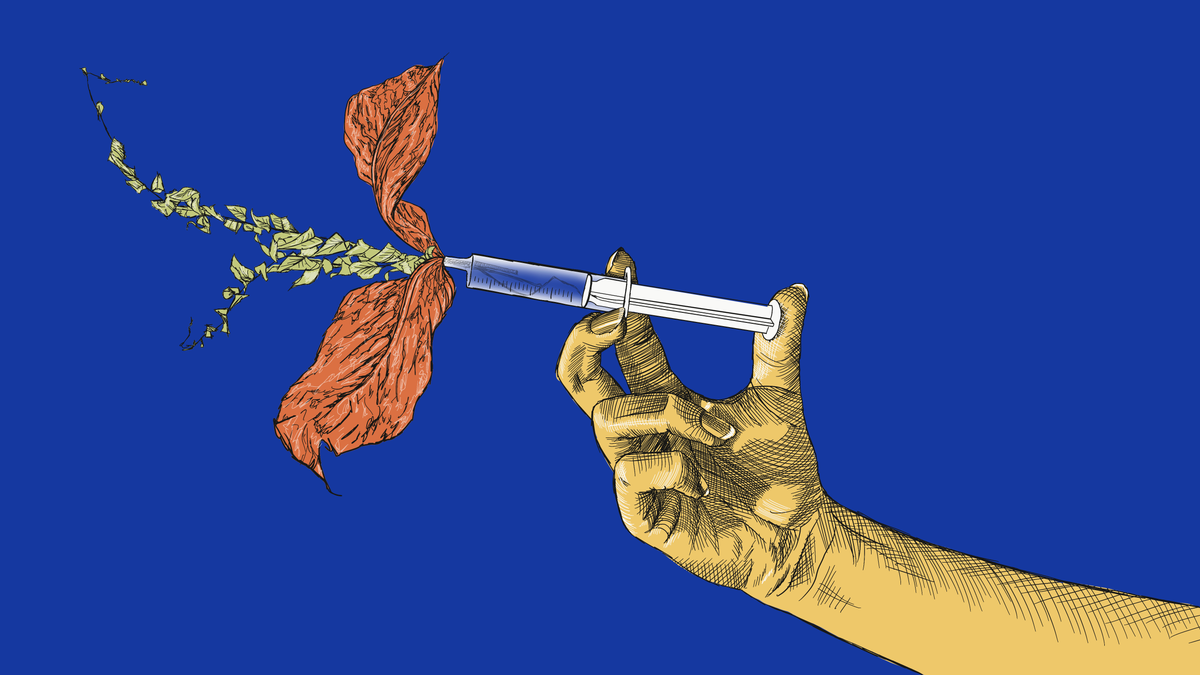
The spread of anti-vaccine narratives in Nigeria is a growing public health challenge, leveraging cultural beliefs and religious authority to undermine global vaccination campaigns. These narratives often portray traditional medicine as superior to Western pharmaceuticals, creating a barrier to vaccine acceptance.
The appeal of traditional medicine
In Nigeria, vaccine misinformation thrives by exploiting deep-rooted cultural and religious beliefs, positioning traditional medicine as a superior alternative to Western pharmaceuticals. These narratives, often spread by influential religious leaders and amplified on social media, fuel public distrust in vaccination campaigns. From COVID-19 to polio, disinformation has shaped public health responses, sometimes leading to widespread vaccine hesitancy. With a highly engaged digital population and historical grievances against foreign medical interventions, misinformation continues to spread rapidly, challenging efforts to protect communities from preventable diseases.
Social media platforms have been instrumental in spreading these anti-vaccine narratives. Nigeria’s young population actively engages in social media, with some 51.2 million accounts on Facebook and 5.7 million on X. According to the communications sector regulator, the country has a broadband subscription rate of 91.5 million or a penetration rate of 42.24% and a youth literacy rate of 75%.


During the COVID-19 pandemic, claims spread through various channels that consuming tea, garlic, salt, and water could cure the virus. These narratives gained traction partly because they resonated with deeply rooted trust in natural remedies over Western medicine.
During the fight against polio in Nigeria, there was a widespread rumour that Bill Gates was using foreign polio vaccines to sterilise children and reduce Nigeria’s population. This, in part, stemmed from the anger that trailed the 1996 Pfizer vaccine disaster, which left several children dead, paralysed, deaf, and blind in Kano, northern Nigeria.
Religious influence and vaccine misinformation
Religious leaders play a significant role in amplifying these narratives. For instance, some prominent Christian and Islamic figures have publicly criticised vaccines, framing them as tools of Western control or as contrary to divine solutions. Sermons and community meetings have been pivotal in spreading misinformation, especially in rural areas with limited access to verified information. These leaders’ influence often outweighs that of public health officials, creating a challenge for vaccination drives.
Nigeria has over 74 million Christians and 104 million Muslims, with thousands of churches and mosques acting as key information hubs. In northern Nigeria, where religion and illiteracy dominate, clerics greatly influence the populace. Their teachings, including falsehoods, are believed by congregants, most of the time without questioning.
Chris Oyakhilome’s Believers’ Loveworld and David Oyedepo’s Living Faith Church Worldwide are among the largest, with branches nationwide. Both have devoted adherents. These preachers’ teachings, seen as divine instructions, are taped and distributed for free or sometimes sold to congregants who do not have access to the internet or fail to connect to the churches’ digital platforms.


Social media as an amplifier
While sermons remain a powerful vehicle for spreading health misinformation, their influence often extends beyond the church, especially when amplified through digital platforms. Sermons are usually live-streamed and sometimes shared in bits on social media for larger audiences.
For instance, on May 09, 2021, a church service streamed on the Living Faith Church Worldwide YouTube channel with 899,000 subscribers. It featured its leader, David Oyedepo, discouraging members from taking the COVID-19 vaccine, claiming it was ‘untested and deadly.’ The video has since garnered ~158,000 views
On April 16 2024, this X post by an adherent of popular televangelist and president of Believers’ LoveWorld Oyakhilome has a video of the cleric saying Africa does not need a malaria vaccine and has been viewed over 112,000 times.
Bots and coordinated campaigns frequently amplify posts that claim vaccines cause infertility or are tools of population control. This anti-vaccine video from Oyakhilome was shared on X by a user named Michael Ajobo, an adherent who consistently posts videos of the preacher and his anti-vaccine rhetoric. Mr. Ajobo also coordinates the Loveworld X Community, a Telegram group with 275 members, where several videos of Oyakhilome’s anti-vaccine teachings are shared. Group members are encouraged to share the videos on their personal social media platforms and ‘flood’ the comment sections of X posts that push the cleric’s misinformation.
Ajobo also coordinates another X page called The Docket, where he hosts spaces like this one, which had 581 people tune in. During these spaces, Ajobo dishes out misinformation about vaccines.
Moving forward
Addressing vaccine misinformation in Nigeria requires a multifaceted approach. Public health campaigns must engage cultural and religious leaders as allies rather than adversaries, emphasising the compatibility of vaccines with traditional beliefs. While some clerics have spread vaccine disinformation, a few have collaborated with authorities to enhance vaccination campaigns. For example, in December 2021, the former Emir (king) of Kano and a Muslim spiritual leader in Nigeria, Aminu Ado Bayero, collaborated with the Kano state primary healthcare management board to issue a special message, which was posted on social media, urging Muslims to get vaccinated. Also, the senior pastor of Trinity Church, Ituah Ighodalo, and general overseer of one of Nigeria’s largest churches, the Redeemed Christian Church of God, pastor Enoch Adeboye, encouraged their congregants to get vaccinated.
‘It is foolishness to keep having faith that God will protect you from an infection he has made provision for vaccines that can provide a high percentage of protection,’ Ighodalo said.
Additionally, digital monitoring to counteract misinformation spread by social media bots must become a priority for policymakers. Though Nigeria’s health ministry does not have a dedicated initiative to counter misinformation, both the Nigeria Centre for Disease Control and Prevention and the National Primary Health Care Development Agency regularly use social media posts to counter misinformation. In November 2020, UNICEF collaborated with the NCDC to launch an SMS-based interactive chatbot to provide Nigerians with accurate information on COVID-19. Also, a non-profit health communication and advocacy organisation, the Nigeria Health Watch, launched the Health Fact Check Nigeria to address health misinformation in the country.
By fostering trust through culturally sensitive communication and combating misinformation, Nigeria can improve vaccine uptake and bolster public health resilience.
This article was co-written by Justice Nwafor and Nurudeen Akewushola, freelance journalists, working with the Pravda Association, and Jakub Śliż. The article was edited by senior editors Eva Vajda and Aleksandra Wrona and iLAB managing editor Janet Heard.